
Adam’s Forward Bend Test
The Adam’s Forward Bend Test is a simple orthopedic screening tool for detecting scoliosis (side-to-side spinal curvature), sometimes used for other spinal asymmetries such as kyphosis. It is widely used in clinics and school screenings due to its quick, non-invasive nature.
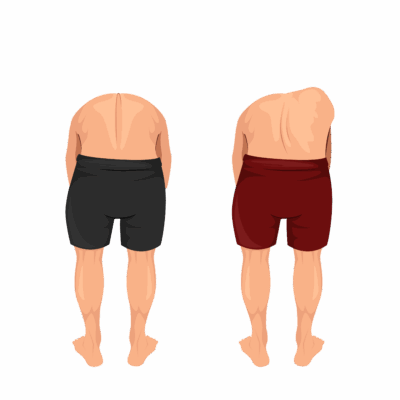
How the Test is Performed
-
Client position: Standing, feet together, arms relaxed at the sides.
-
The client bends forward at the waist (about 90°), letting arms dangle freely toward the floor, keeping knees straight.
-
The examiner views the client from behind, looking for asymmetries in:
-
Spine alignment
-
Rib cage height (rib hump)
-
Shoulder or scapula height
-
Waistline symmetry
-
-
A positive sign: Visible rib hump, uneven shoulders, unlevel scapulae, or other trunk asymmetries that persist during forward bending.
Clinical Significance
-
The test screens for structural scoliosis—a rib prominence (hump) on one side during bending is a classic sign.
-
Certain asymmetries may indicate functional causes (like leg length discrepancy) rather than true structural scoliosis.
-
The test is especially sensitive for thoracic scoliosis but can also detect lumbar and mixed curves.
-
Any suspected structural curve warrants further evaluation (e.g., X-ray/Cobb angle) for official diagnosis and management.
Assessment
-
Use the Adam’s Test in clients presenting with visible spinal asymmetry, postural concerns, pain, or a family history of scoliosis.
-
This test is a screening tool, not diagnostic; refer for imaging and specialist evaluation if a positive finding is present.
-
Document findings clearly—including shape and side of rib hump, degree of asymmetry, and any notable compensatory patterns.
Treatment
-
For confirmed or suspected scoliosis:
-
Avoid aggressive spinal mobilization and deep techniques over prominent ribs or rotation points.
-
Focus on gentle soft tissue therapy, myofascial release, and work to support symmetrical muscle balance and movement.
-
Educate clients about posture, self-care, and the importance of multidisciplinary management (physician, physiotherapist, orthotist as needed).
-
-
For functional asymmetry:
-
Assess and address contributing factors (leg length discrepancy, muscular imbalance), but refer if structural curve is likely.
-
Safety and Referral
-
Any child, adolescent, or adult with a positive Adam’s Test should be referred for orthopedic or physiatrics evaluation and imaging to confirm scoliosis or other spinal diagnosis.
-
Early detection is crucial for best outcomes (especially for growing children).