
Kernig’s Sign
Kernig’s Sign is a classic clinical test used to detect meningeal irritation, most commonly due to meningitis or sometimes subarachnoid hemorrhage. The sign is based on the principle that inflammation of the meninges causes pain and resistance when the stretched neural tissues are put under tension.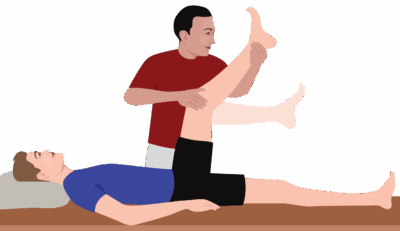
How the Test is Performed
-
Client position: Supine (lying on back), hips and knees flexed to 90 degrees.
-
The examiner slowly extends the knee while keeping the hip flexed at 90°.
-
Positive Kernig’s Sign: The appearance of pain, resistance, or inability to fully extend the knee beyond 135°, often accompanied by hamstring spasm or marked discomfort.
-
The test should be performed bilaterally for comparison.
Clinical Significance
-
A positive Kernig’s Sign indicates meningeal irritation—a red flag finding for meningitis or subarachnoid hemorrhage in an appropriate clinical context.
-
Sensitivity of the test is low (~5–10%), so its absence does not rule out meningitis, but it has high specificity (~95%)—if present, it is highly suggestive of meningeal disease.
-
The test is usually performed alongside other signs (Brudzinski’s sign, nuchal rigidity) in the neurological exam.
Assessment
-
Massage therapists do not perform Kernig’s Sign as part of their assessment, but should understand its significance as a marker of serious neurological illness.
-
If a client reports sudden severe neck stiffness, headache, photophobia, fever, confusion, or complaints that suggest meningeal irritation (especially recent infection/illness or rapid progression), recognize this as a red flag and refer immediately for emergency medical evaluation.
-
Document any concerning neurological findings or health history and all actions taken.
Treatment
-
Massage therapy should NEVER be performed on a client with suspected or confirmed meningitis or central nervous system infection.
-
Avoid direct, deep, or aggressive manual techniques in clients with unexplained headaches, neurological changes, acute systemic illness, or underlying health risks until cleared by a physician.
-
Gentle supportive care or positioning for comfort may be appropriate only after full medical clearance and stabilization of the underlying condition.
Safety and Referral
-
Immediate emergency referral is required if a client presents with signs or history that may be consistent with meningitis or meningeal irritation.
-
Collaborate with medical teams; never attempt to treat or “wait and see” if viral, bacterial, or hemorrhagic causes are suspected.