
Pregnancy Massage
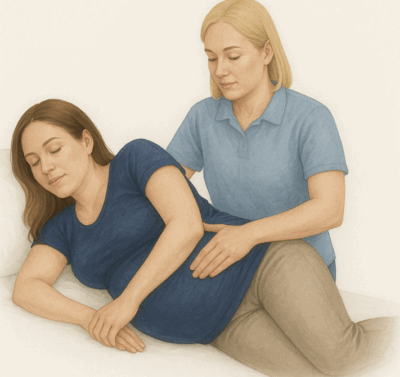
A Pregnancy Massage, also known as prenatal massage, is a nurturing hands-on therapy designed for expectant mothers to alleviate pregnancy-related discomfort, promote relaxation, and support both physical and emotional well-being as the body adapts to pregnancy.
Signs & Symptoms
- Lower back pain, sacroiliac pain, and pelvic discomfort
- Muscle tension, especially in the hips, thighs, neck, and shoulders
- Leg cramps and swelling (edema) in legs, ankles, and feet
- Sciatic nerve pain, headaches, and sleep disturbances
- Stress, mood swings, and anxiety related to pregnancy changes.
Contraindications
- Avoid massage during the first trimester if at high risk for miscarriage unless medically cleared
- Do not treat if active infection, fever, or severe illness is present
- Contraindicated with vaginal bleeding, severe preeclampsia, uncontrolled hypertension, or high-risk pregnancy complications
- Refrain from deep pressure work on inner thighs, abdomen, or points believed to stimulate uterine contractions (such as certain acupressure points)
- Avoid in areas with varicose veins, open wounds, or blood clots.
Assessment
- Review current trimester, pregnancy complications, and relevant medical history
- Identify specific discomforts, muscle tension, and swelling
- Assess for posture changes, gait alterations, and joint instability due to relaxin hormone
- Screen for symptoms of DVT, unexplained swelling, severe headaches, or abdominal pain
- Collaborate with prenatal care provider for high-risk cases and clarify needed modifications.
Treatment
- Use gentle Swedish massage techniques, side-lying positioning with support pillows, and light to moderate pressure
- Address muscles most commonly affected by pregnancy, such as lower back, hips, shoulders, and legs
- Lymphatic drainage techniques can ease swelling in limbs; light effleurage to improve circulation and relaxation
- Avoid deep tissue work, strong pressure on abdomen, and prone position after the first trimester
- Provide emotional support and maintain open communication, adjusting for comfort and any symptoms.
Self Care
- Gentle stretching and prenatal yoga to promote flexibility and circulation
- Use of pillows to support positioning during sleep and rest
- Daily self-massage with light pressure to swollen or tense areas using safe oils or lotion
- Maintain hydration and regular activity (walking, swimming) as advised by care provider
- Practice relaxation and mindfulness techniques for emotional well-being
- Report any unusual symptoms (severe swelling, dizziness, cramping) to healthcare team promptly