
Slump Test
The Slump Test is a neurodynamic assessment used to evaluate mechanical tension, mobility, and sensitivity of the nervous system (especially the sciatic nerve and lumbosacral nerve roots). It is commonly performed when clients present with lower back pain, leg symptoms (tingling, numbness, burning), or suspected radiculopathy.
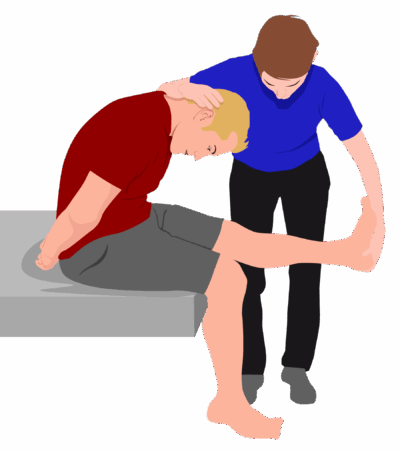
How the Test is Performed
-
Client position: Seated at the edge of a treatment table, arms loosely behind the back.
-
Test sequence:
-
The client slumps/lumbar flexes forward, thoracic spine flexed, while keeping the head up.
-
Therapist applies gentle overpressure to shoulders to maximize thoracic flexion.
-
The client flexes the neck, chin toward chest.
-
With trunk and neck flexed, the client extends one knee (straightens leg).
-
Then, the ankle is dorsiflexed (toes toward shin).
-
-
Each stage can be performed progressively, monitoring symptom reproduction throughout.
-
Positive test: Reproduction of the client’s familiar radicular symptoms (sharp pain, paresthesia, burning, “nerve stretch” feeling) in the back, buttock, thigh, calf, or foot.
Clinical Significance
-
The Slump Test helps identify nerve root entrapment, disc herniation, or neural tension in the lumbosacral tract.
-
Sensitivity ranges from 44–87%; specificity is moderate; the test must be interpreted as part of a full neurological/clinical screen.
-
A positive Slump Test implicates neural tissue involvement rather than purely muscular pain or joint restriction.
Assessment
-
Use when clients present with low back pain and neural symptoms (tingling, burning, shooting pain, radiating leg symptoms).
-
Always screen for red flag symptoms (cauda equina syndrome, infection) before performing the test and refer immediately if indicated.
-
Document stages and symptom reproduction (location, quality, severity) throughout the test for tracking and communication.
Treatment
-
If positive: Avoid aggressive soft tissue or mobilization techniques over the low back, gluteals, or legs that could further irritate the nerve.
-
Focus on gentle myofascial release, pain-modulating modalities, and education about body positioning and neural mobility.
-
Collaborate with physiotherapists or medical professionals if symptoms persist, radiate, or result in significant functional limitation.
-
Educate clients on posture, safe movement strategies, and activity modification to limit neural irritation.
Safety and Referral
-
Refer for further medical investigation (imaging, neurological evaluation) if:
-
Progressive or severe neurological symptoms (strength loss, numbness, bladder/bowel involvement).
-
A markedly positive Slump Test with functional impairment.
-